Move from one online casino to the next and the lobbies start to blur together. The games are the same, and so are the suppliers behind them. Sandra Wong thinks that sameness is an expensive problem for operators that pay heavily to acquire each player. “If you’re spending, like, $200 to $2,000 for user acquisition, you’re gonna want to retain these players for a long time,” she said on the BettingStartups Podcast. Her answer is original games a player can’t find anywhere else.
Wong is the CEO of Lucky Lady Games, the Vancouver studio behind Volt, a platform she says will let operators and studios create and launch original branded games in minutes. It grew out of internal tools. Wong started as a graphic designer, played poker professionally, and worked as a product designer at VGW in the early days of Chumba Casino. Lucky Lady then spent roughly a decade as a consultancy for early-stage gaming startups, and the team got tired of doing the same work twice.
Wong is quick to say Volt isn’t meant to replace game catalogs or flood lobbies with AI-generated filler. The prompt-to-game piece gets the attention, but she calls it a fraction of the product. “People look at Volt as, I think, the game wizard that you can just put in a prompt and create a game, but that is like 10% of what the actual platform is,” she said. Before a game is made, Volt looks at the jurisdiction, the operator’s brand, its audience, and the devices they use. It then recommends which themes to avoid and what mix belongs in the lobby. An early test is Ghana, where Lucky Lady recently signed a deal with operator Goldbet.
Volt itself isn’t live yet. What is live is a boutique aggregator Lucky Lady launched in January as its MVP, now carrying about 11 providers. It doesn’t compete on catalog size. Wong negotiates each deal herself, trading a lower share of gross gaming revenue for guaranteed lobby placement. In May, the company released a collection of 50 games built with Volt. Revenue comes from a powering fee on games running on its own remote gaming server, with subscriptions and usage tokens to follow when the creation tools open up.
The pitch to operators is speed and cost. “You shouldn’t have to give up 10% of your GGR just to put some differentiation in,” Wong said. She also questions why a seasonal campaign should take four to six months when live ops could turn it around in two weeks.
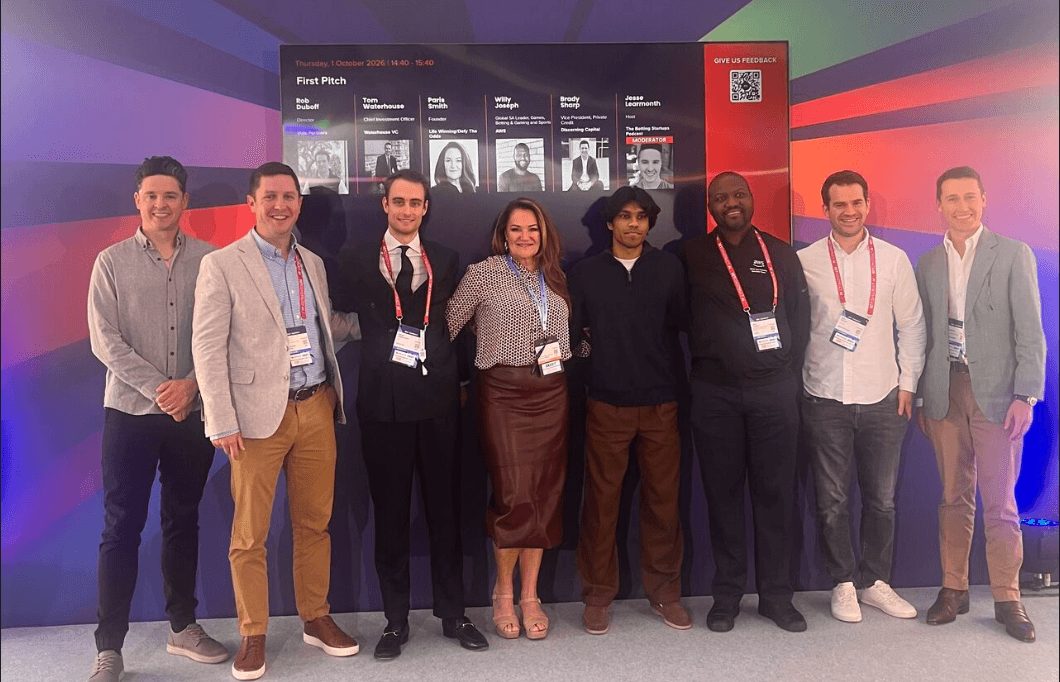
Lucky Lady has been bootstrapped so far. Wong recently went through the ninth cohort of the Zero Labs accelerator in Las Vegas, alongside First Pitch winner GMonitor, where Volt won the AWS Game Changer Visionary Award. Wong is now opening a $3M seed round, which she expects to fund 18 to 24 months of runway.
She is candid about the risk. “There is an elephant in the room about being an AI project where anybody can just take your project and create it again,” she said. Certification and trained models are the moat she plans to build. The next 12 months are about closing the seed, going live in Africa, signing tribal deals, and launching the platform.
Listen to the full podcast on YouTube, Spotify, and Apple Podcasts.